How to Sign Your First Interior Design Client: 5 Steps for New Designers

How do you get your first client as an interior designer? You start with the people already around you, you make it easy for one of them to say yes, and you have a clear process ready for the moment she writes. This post takes you through it in five steps, for solo interior designers, decorators, and stylists who are new and want this to become their main income.
I started my own studio with no following and no clients. Nine months later I was fully booked. 👀 So when I say a first client is possible without a big following, I am saying it from my own start.
If you have been posting for weeks and hearing nothing back, or you have just graduated and have no idea what to do when the first phone call comes, this one is for you.
In this post, you'll learn:
- how to say who you help in one clear sentence
- why the people around you are the best place to begin
- how to explain your price before anyone asks
- what to have ready for the very first message
- how to make it feel safe for her to say yes
Step 1: Who are you looking for, and what do you help her with?
Write it as one sentence: who you help, and what changes for her home or her days. "I help [who] with [what]" is plenty to begin with.
Write it for her, and for nobody else. A lot of this industry builds portfolios, websites and feeds to win the approval of other designers. A first client usually wonders two things: will you understand what she wants, and can she trust you with her home? One clear sentence answers both, and it gives the people around you something easy to pass on.
Step 2: Who already knows you?
Start with the people around you. This industry runs on relationships, and a first client often comes through someone who already knows you, or knows someone who does.
Make a short list: friends, friends of friends, people you studied or worked with. Then tell them what you do and who you help, in your one sentence. Out loud, in a message, over coffee, whatever feels most like you.
I know this can feel awkward when you are new {sooo awkward}. For about four months in my own studio I did the opposite. I knew real networking mattered more than a perfect feed, but I did not trust myself yet as a new designer, so I spent $1,000 on branded photos and chased the "look pro" facade instead. It was a trap, and I walked right into it, even though I knew better.
Then I stopped making social media my main strategy and went back to real networking. That is what actually made the difference. 💛
Step 3: What will you charge, and can you explain it?
Decide how you charge and where your projects start, before anyone asks. Then be ready to say what the number depends on, in a sentence or two. A number with a reason next to it is something she can actually think about.
The price question can arrive in the very first message, before a call. I wrote a whole post on what to reply when she asks your price first, so you can plan it once.
Step 4: What happens when someone writes to you?
Have your first reply, your inquiry form and your discovery call ready BEFORE the first message arrives. Nothing fancy. A short reply that answers her question, a form with a few questions about her home, and a call where you know what you want to find out.
It is so much easier to stay steady on that first call when the thinking is already done {pinky promise}.
And if a lead goes quiet after the call, that has its own steps. Here is what to send when a lead goes quiet after the discovery call.
Step 5: How do you make it feel safe for her to say yes?
Give her a clear next step at every stage. After the call she should know what you are proposing, what working with you looks like and what happens next. A professional process is part of what makes a client feel safe saying yes.
I learned this the hard way. Three projects worth $5,000 each came in, and I was so focused on branding and polish that I dropped the ball on onboarding them in a way that signed them. That was a flaw in my focus and my process, and both can be fixed.
When you are ready to put a proposal together, start with these 5 steps to an interior design proposal that feels safe to say yes to.
You're allowed to start small. One list, one clear sentence, one conversation at a time.
Questions new designers ask about getting a first client
Do I need a following to get my first client?
No. I started my studio with none, and nine months later I was fully booked. Clients hire the designer they trust most, and trust grows from real conversations, one at a time.
Do I need years of experience first?
You don't need five years of projects to be trusted. Clients feel safe with clarity, consistency and a professional process, and you can build all three before your first project.
How many clients do I need to start with?
One. Then the next. A solo interior designer can realistically carry about four projects a month, so the number you are building toward is a small one.
How long does it take to sign a first client?
I can't give you a number, because it is different for every designer. It depends on who you know, how clearly you can say what you do and how ready you are when someone writes. Every step above is something you can start this week.
Want the whole plan in one place?
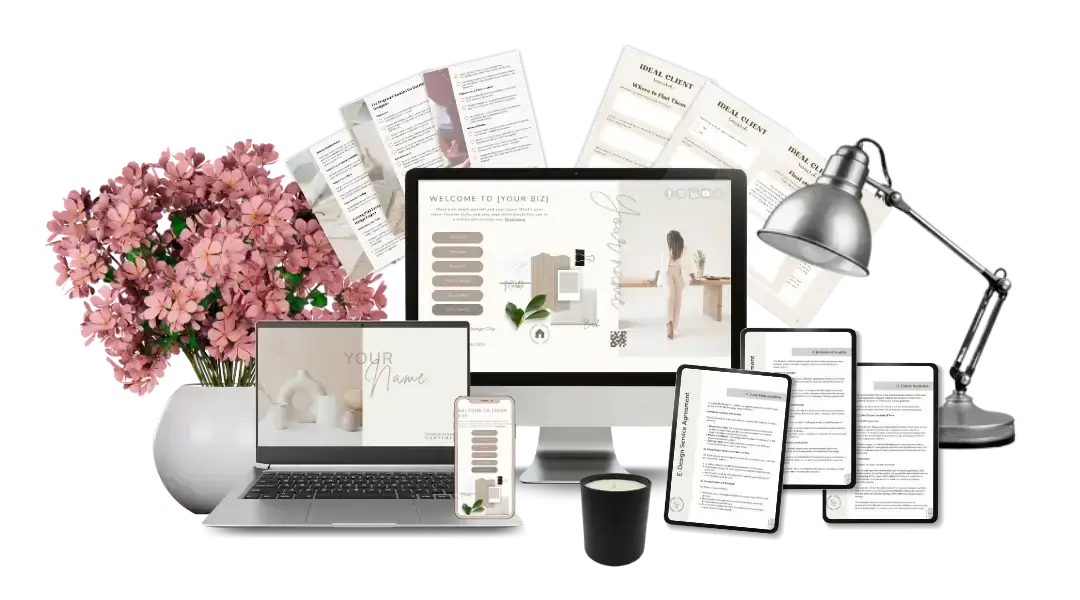
Confident & Booked is my class for new designers who do not have a client yet. It has a step-by-step client-getting plan, pricing built for when you have no projects behind you, marketing slimmed down to what a brand-new designer needs, and what to say and do once someone writes, with templates in Canva and Google Docs. Inside is my Love Loop Client-Getting Strategy, a way to earn your first clients through the community already around you.
"I purchased the Confident & Booked course, and it's been a lifesaver for me, as I really didn't know which way to turn." Jo B., recent interior design graduate, UK
I'm Sandra Törnroth, a business and sales strategist for solo interior designers, decorators, and stylists. Twenty years in business: ten in corporate finance, at the tables where high-stakes deals were negotiated, then ten in business strategy and sales for creative businesses. I ran my own interior design studio before I started teaching what I learned.